From Trinidad to Jamaica, explore the rich traditions and vibrant celebrations of Caribbean carnival—where music, dance, costumes, and community spirit collide to create one of the most colorful cultural expressions in the world.
Carnival in the Caribbean isn’t just a festival—it’s a living story told through rhythm, masquerade, and revelry. It’s history woven into song, identity stitched into costumes, and freedom danced through the streets. For many islands, Carnival is more than a holiday; it’s a heartbeat that unites past and present, ancestry and innovation.
Let’s dive into the origins, traditions, and unique expressions of Carnival season across the Caribbean.
The Roots of Caribbean Carnival
Carnival’s Caribbean story began with colonization and the transatlantic slave trade. European settlers brought the Catholic pre-Lenten tradition of masquerade balls to the islands, but enslaved Africans—barred from attending—created their own parallel celebrations.
Here they infused African drumming, dances, and spiritual practices, creating a cultural fusion. Carnival became:
- A protest against oppression, using satire, masks, and parody to mock colonial masters.
- A preservation of heritage, blending African traditions with European festivities.
- A symbol of freedom, especially after emancipation, when formerly enslaved people claimed the streets as their stage.
Today’s Caribbean Carnival reflects this history—at once joyous, rebellious, and deeply cultural.
Key Elements of Carnival
Though each island’s celebration has its own identity, a few elements define the season:
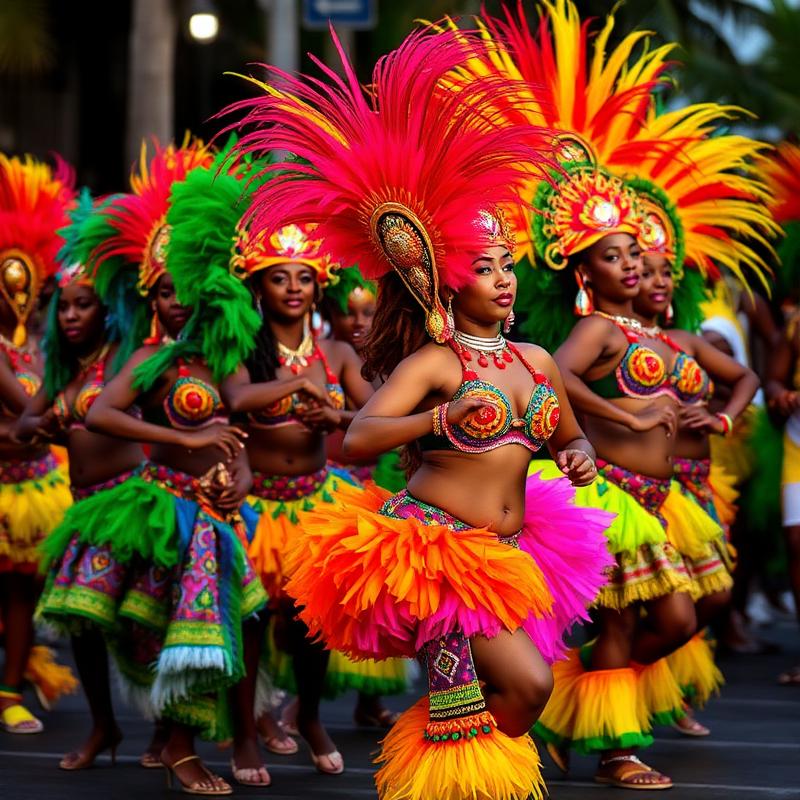
- Masquerade (Mas): Colorful costumes, masks, and body paint transform participants into living art.
- Music: Calypso, soca, dancehall, reggae, and steelpan bands fuel the movement.
- Parades: Streets flood with costumed revelers, floats, and dancing troupes.
- J’Ouvert: A pre-dawn ritual of paint, powder, and mud—raw, chaotic, and liberating.
- Food & Drink: Street vendors serve island specialties like jerk chicken, doubles, fried plantains, and rum punch.
Carnival Across the Caribbean
Trinidad & Tobago – The Epicenter
Often called the “Mother of Caribbean Carnival,” Trinidad’s celebration is unmatched in scale and influence. The two-day parade, filled with “mas bands” of elaborately costumed revelers, is the centerpiece. Calypso and soca competitions add to the excitement, while J’Ouvert unleashes the playful spirit of paint and mud.
Signature moment: The “Road March,” where the most-played soca song becomes the season’s anthem.
Jamaica – Dancehall Meets Masquerade
Though younger than Trinidad’s, Jamaica’s Carnival is uniquely vibrant, blending traditional mas with reggae and dancehall culture. Week-long parties, beach fetes, and soca-infused parades dominate Kingston and Montego Bay.
Highlight: The fusion of Caribbean genres, where soca meets dancehall on the same stage.
Barbados – Crop Over Festival
Barbados celebrates Carnival as part of its Crop Over Festival, rooted in the end of the sugar cane harvest. Costumes are glamorous, music is infectious, and the energy peaks with Grand Kadooment Day—a parade through the capital filled with glitter, feathers, and revelry.
Fun fact: International stars like Rihanna frequently return to take part in Crop Over.
Haiti – Kanaval
Haiti’s Carnival is a mix of pageantry, satire, and music. Rara bands, with bamboo horns and drums, fill the streets with hypnotic rhythms. Costumes often carry political or cultural symbolism, making Kanaval both a celebration and a social commentary.
Unique flavor: Parades shift between humor, resistance, and spirituality.
Dominican Republic – La Vega Carnival
One of the oldest in the Americas, La Vega Carnival features the iconic Diablo Cojuelo—devil characters with vibrant masks and whips. The celebration is theatrical, blending folklore with Spanish colonial traditions.
Must-see: The elaborate handmade masks, often passed down through generations.
Other Islands, Other Stories
- St. Lucia: Famous for its music competitions and Carnival Queen pageants.
- Grenada (Spicemas): J’Ouvert is dominated by “Jab Jab” masqueraders covered in oil and paint, symbolizing resistance and rebellion.
- Bahamas (Junkanoo): Though celebrated at Christmas, Junkanoo shares Carnival’s energy with elaborate costumes and parades.
Beyond the Costumes: Carnival’s Deeper Meaning
Carnival is far more than feathers and music. At its heart, it represents:
- Freedom: A celebration of emancipation, where the streets belong to everyone.
- Identity: A showcase of each island’s culture, dialect, and music.
- Unity: Carnival draws together locals, diasporas, and visitors in one shared rhythm.
- Expression: It provides space for satire, resistance, and unfiltered joy.
Challenges & Changes in Modern Carnival
Like many traditions, Carnival has evolved. Some concerns today include:
- Commercialization: Sponsorships and tourism can overshadow grassroots traditions.
- Cultural Dilution: International appeal sometimes pushes celebrations away from their historical roots.
- Safety & Infrastructure: Managing massive crowds while keeping celebrations authentic is a delicate balance.
- Digital Influence: Social media has amplified Carnival’s global profile, but also pressures participants to “perform” for the camera.
Yet despite these challenges, Carnival remains a living tradition—resilient, creative, and ever evolving.
Tips for Experiencing Carnival
- Plan Ahead: Flights and hotels sell out months in advance, especially in Trinidad.
- Join a Band: For a truly immersive experience, register with a mas band and march in costume.
- Respect Tradition: Learn about the cultural significance behind J’Ouvert, masquerade characters, and music.
- Stay Safe: Stick with groups, stay hydrated, and pace yourself—it’s a marathon, not a sprint.
- Savor the Food: Carnival is as much about taste as it is about sound and sight.
Final Thoughts
Carnival is more than a festival—it’s a cultural deep dive into history, resistance, and identity. From the vibrant mas bands of Trinidad to the political satire of Haiti, each island tells its story through Carnival.
It is the sound of steelpan echoing through Port of Spain, the sight of sequins shimmering in Kingston, the taste of doubles in the street, and the feeling of liberation as dawn breaks during J’Ouvert.
For the Caribbean and its diaspora, Carnival is a declaration: We are here, we are free, and we will celebrate life with every beat of the drum.